
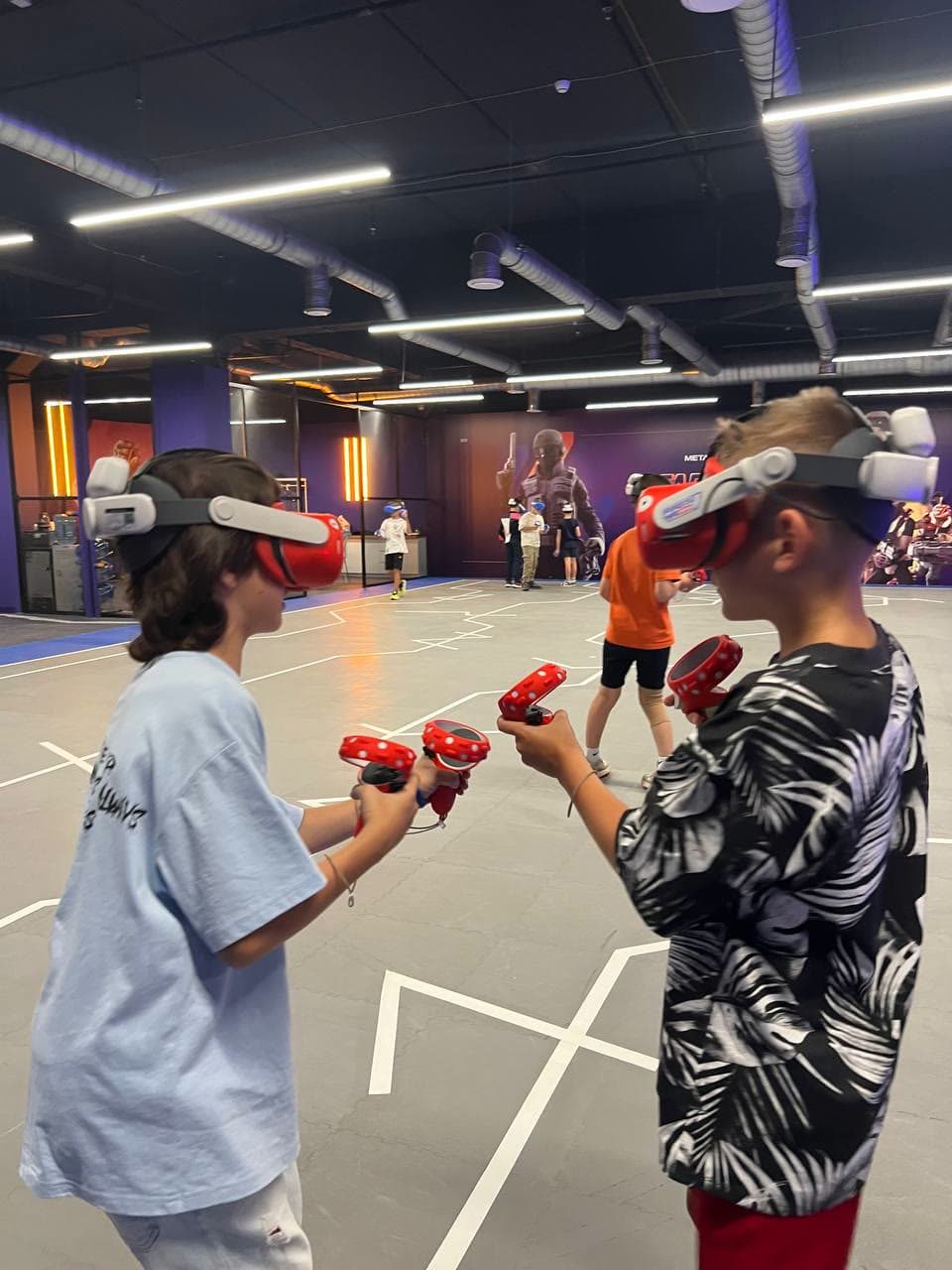
A VR arena needs a small team that covers four jobs: running the games, looking after guests at reception, keeping equipment ready and selling events. The roles can be combined in a small venue, but each job has to be done on every shift. Metaforce VR Arena partners get launch support, staff training and a knowledge base that covers equipment setup, cash handling, staff routines, the CRM and headset care.
This article walks through the roles, what good training looks like and why written routines matter more than any single hire.
Why do staff matter so much in a VR arena?
A VR arena is a service business. Guests remember the game, but they also remember how they were greeted, how clearly the rules were explained, whether the headset was clean and whether the session started on time. A weak game master can spoil a great game, and a strong one can turn a first visit into a birthday booking or a corporate event.
Staff also protect the asset. Headsets, controllers and tracking equipment are the most expensive things in the venue, and daily handling decides how long they last.
What roles does a VR arena need?
The names vary from venue to venue. What matters is that each function is covered:
| Role | Main tasks |
|---|---|
| Arena manager | Runs the venue: schedules, cash, reports, staff, quality, relations with the landlord |
| Game master (operator) | Briefs players, fits headsets, starts and runs games, watches the arena, pauses play when needed |
| Reception / host | Greets guests, checks bookings, takes payments, sells gift certificates, runs the lounge |
| Sales / events | Handles birthday and corporate inquiries, follows up leads in the CRM, builds packages |
| Technical support | Equipment setup, updates, troubleshooting, headset care (often a duty of the manager or a senior game master) |
In a small arena one person may combine reception and game master duties on a quiet weekday, while on a weekend the same venue needs separate people for each. The manager often takes on sales and technical tasks in the first months.
A typical example (illustrative only, not a Metaforce requirement): a mid-sized arena might plan one manager plus a rota of game masters and hosts so that at least two people are on the floor at peak times: one at reception, one on the arena. Your real headcount depends on opening hours, venue size, local labor rules and how many events you sell.
What does a game master actually do?
The game master is the role guests see the most, so it's worth describing in detail. During one session, the game master:
- Checks the group. Number of players, ages, which game fits the group. Metaforce shooters are rated 7+, Mini Games 6+, and Zombies (coming soon) 9+.
- Runs the briefing. How to move, how the game works, where the boundaries are, what to do if someone feels unwell.
- Fits the equipment. Adjusts headsets so they sit well, checks controllers and tracking.
- Starts and runs the game. Chooses the game and map (in Metaforce arenas, in the operator app that runs sessions), splits teams, keeps the energy up.
- Watches the arena. Not only the screens. In free-roam VR, players walk and run for real, and the game master watches for collisions, fatigue or discomfort. Movement in the game matches real movement, so motion sickness is less common than with joystick locomotion, but it can still happen, and the game master should pause a player without fuss.
- Closes the session. Helps players remove headsets, cleans equipment, prepares the arena for the next group, and points the group to the lounge.
A good game master also sells: a group that enjoyed the session is the easiest moment to mention birthday packages, gift certificates or the next new game.
What should a VR arena knowledge base include?
People leave, shifts change and memory fails. Written routines keep the arena running the same way whatever happens. The Metaforce knowledge base covers five areas:
| Area | What it covers |
|---|---|
| Equipment setup | How to set up and start the system, what to check before opening |
| Cash handling | How payments are taken and recorded, end-of-day routines |
| Staff routines | Opening and closing, session flow, briefing, how to handle typical situations |
| CRM | How bookings, customer records and events are kept in the network CRM |
| Headset care | Cleaning, storage, charging and daily handling of headsets |
On top of that, each operator should add local documents: the house rules, the age policy agreed with local rules and insurance, emergency procedures for the building, contacts of the landlord and suppliers.
How should you train a new VR arena team?
Training works best in layers:
- Before opening. The whole team learns the system, the games and the routines. Metaforce partners get launch support and staff training as part of the subscription, and a manager stays in contact through opening.
- Shadowing. New game masters run sessions alongside an experienced colleague before they work alone.
- Checklists. Opening, session and closing checklists turn training into habits.
- New content. Metaforce releases new maps or games every 6 months, included in the subscription. Each release is a short training moment: rules, briefing, how to sell it.
- Regular review. Guest feedback and incidents are discussed with the team, not just filed away.
What does a typical shift look like?
Opening: start the equipment, check headsets and tracking, check the arena floor, review the day's bookings in the CRM.
During the day: run sessions on schedule, keep the lounge tidy, take payments, answer calls and messages, log new inquiries.
Between sessions: clean headsets and controllers, check charge levels, reset the arena.
Closing: cash routine, charge and store equipment, note any issues for the next shift, update the CRM.
A clear shift structure is what lets a small team handle a busy weekend without mistakes. It is also one of the main things an investor or mall partner checks: does this venue run the same way every day?
How do staff affect the arena's revenue?
Staff influence every revenue line:
- Hourly play. Session turnover and punctuality decide how many games fit into a day.
- Birthdays and corporate events. A quick, friendly reply to an inquiry often decides the booking. See the VR birthday party and VR team building pages.
- Gift certificates. Reception sells them; with the franchise package, certificates are valid for 12 months and sold online.
- Repeat visits. Guests come back to venues where they felt welcome.
Staff wages and taxes are one of the main monthly costs. Budget them line by line, as shown in the VR arcade business plan guide.
What does Metaforce provide, and what is on the partner?
| Metaforce provides | Partner is responsible for |
|---|---|
| Launch support and staff training | Hiring and paying the team |
| Knowledge base: equipment setup, cash handling, staff routines, CRM, headset care | Local rules, contracts and labor law |
| A manager for the partner | Day-to-day management of the venue |
| With the franchise package: the network CRM, a website and a marketing kit | Local sales and service |
| Games adapted to the venue; new maps or games every 6 months | Venue, renovation and equipment |
The subscription costs $4,990 for 6 months, $7,990 for 12 months or $14,990 for 24 months, then $799 per month, taxes included. There is no franchise fee and no royalty. Full terms are on the franchise cost page, and the wider business model is on the VR arcade business page.
Related articles
- Turnkey VR Arena Checklist: From Lease to Opening Day
- Kids' VR Content for Arenas: Age Limits, Safety and Mini Games
- Birthday Parties as a Key Revenue Line of a VR Arena: an Operator's View
FAQ
What roles does a VR arena need?
An arena manager, game masters, reception, sales for events and someone responsible for equipment. In a small venue several roles are combined.
Does Metaforce train my staff?
Yes. Partners get launch support and staff training, and a manager stays in contact with the partner.
What does the Metaforce knowledge base cover?
Equipment setup, cash handling, staff routines, the CRM and headset care.
Do game masters need technical skills?
Basic ones. They follow the equipment setup and headset care routines; deeper technical questions go to the manager or a senior team member.
How many staff does a VR arena need?
It depends on opening hours, venue size, local labor rules and how many events you sell. Plan so that the arena and reception are both covered at peak times.