
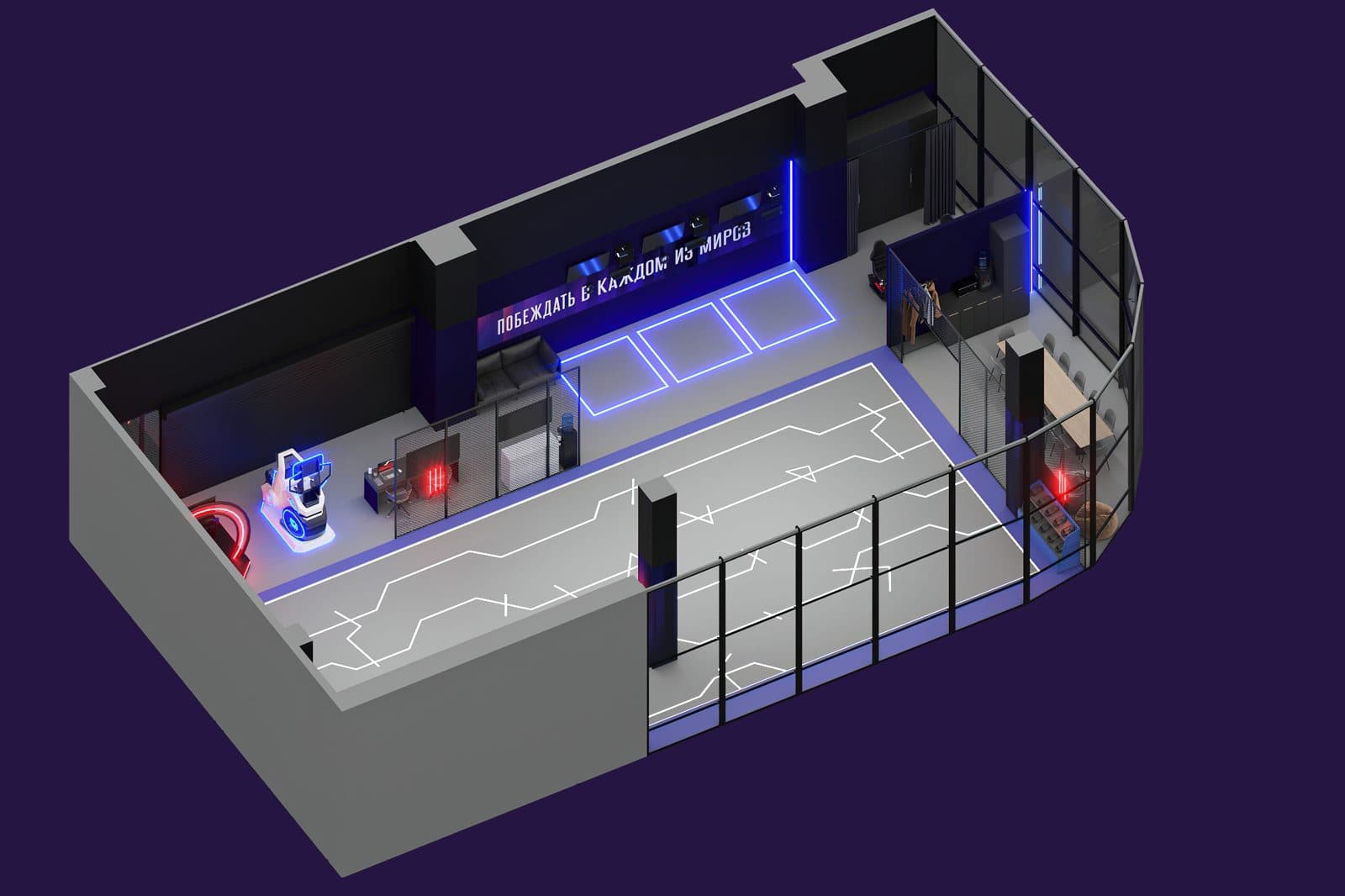
A turnkey VR arena means you get the games, the know-how and the launch support as one package, while you handle the venue, renovation and equipment. This checklist takes you from the first look at a venue to opening day. With Metaforce VR Arena, the venue needs a 50–300 m² play area, 10–15 kW of power, a level floor and ceilings from 2.5 m.
Use the list as a working document. Tick items off, add local requirements, and send your floor plan to Metaforce early so the venue is checked before you commit.
What does "turnkey" mean in the Metaforce model?
Turnkey can mean very different things from one supplier to another, so define it before you plan. In the Metaforce model:
| Metaforce provides | Partner provides and pays for |
|---|---|
| Games adapted to the exact venue layout | Venue and lease |
| Launch support and staff training | Renovation |
| A manager | Equipment: headsets, computers, tracking (from any supplier) |
| Knowledge base: equipment setup, cash handling, staff routines, CRM, headset care | Staff |
| With the franchise package: website, network CRM, marketing kit | Local sales and marketing budget |
| New maps or games every 6 months, included | Working capital |
The subscription costs $4,990 for 6 months, $7,990 for 12 months or $14,990 for 24 months, then $799 per month (taxes included), with no franchise fee and no royalties. See the franchise cost page for the full budget breakdown.
Stage 1: Is the city and location right?
- City size. Metaforce arenas operate in cities from 20,000 residents.
- Audience. Families with children, teenagers, young adults and companies within reach of the venue.
- Traffic. Shopping mall, family entertainment center or a street location with easy access and parking.
- Competition. Which entertainment venues already serve the same groups, and what they charge.
- Opening hours. Evenings and weekends carry the business; check that the building allows them.
If you are looking at a mall, read VR for shopping malls.
Stage 2: Does the venue meet the requirements?
Check these before you sign anything:
| Requirement | Metaforce figure |
|---|---|
| Play area | 50–300 m² |
| Total venue | 100–700 m² |
| Optimal total area | 150–250 m², with a 100–150 m² play area |
| Power | 10–15 kW |
| Floor | Level |
| Ceiling height | From 2.5 m |
- Floor plan sent to Metaforce. The manager checks whether the venue fits and what needs to change. Metaforce rebuilds the maps around the exact layout, so the room doesn't have to be a perfect rectangle.
- Columns and obstacles marked on the plan.
- Zones planned: play area, reception, lounge, storage and equipment area.
- Players per session estimated. Depending on venue size, 8 to 12 or more people play at once; a game supports 4 to 20 players.
Layout principles are covered in detail on the VR arena design page.
Stage 3: What should you check in the lease?
- Power on paper. 10–15 kW allocated, or a written commitment from the landlord to provide it.
- Ventilation and air conditioning that keep the room comfortable at full capacity.
- Network. A stable internet connection; check whether you can bring your own line.
- Noise. Players shout and celebrate; check the neighbors and the building rules.
- Restrooms and fire exits agreed according to the building and local rules.
- Permitted use. Entertainment use, including events for children, allowed under the lease.
- Renovation rights. What you can change, who approves the works, and who pays for what.
- Rent-free or reduced period during renovation, if the landlord agrees to one.
- Lease term that matches your plan and your subscription term.
- Signage rights inside and outside the building.
Stage 4: Contracts and paperwork
- Legal entity and bank account set up for the business.
- Subscription term chosen and paid: 6, 12 or 24 months, paid upfront; after it, another fixed term or month to month at $799. When the subscription ends, access to the games stops, so match the term to your plan.
- Local permits and registrations for an entertainment venue, as required in your country and city.
- Insurance for the venue, equipment and guests.
- Age policy agreed with local rules and your insurer. Metaforce arenas admit players from 6; Mini Games is rated 6+, shooters 7+, Zombies (coming soon) 9+. Check the headset manufacturer's guidance for the model you buy.
- Guest rules and consent forms ready.
Stage 5: Budget and financing
- Investment budget line by line: venue deposit, renovation, equipment, subscription, furniture, opening marketing, working capital.
- Monthly costs: rent, staff, utilities, subscription, marketing, maintenance.
- Revenue forecast by format: hourly play, whole-arena rental, birthday parties, corporate events, gift certificates.
- Seasonality built into the forecast. See seasonality of a VR arena business.
For reference, the owner's figures for arenas in Russia are investment from RUB 2.5 million, revenue of RUB 500,000 to 1,500,000 per month depending on city, venue and occupancy, and payback from about one year. Build your own numbers for your market. A template is in the VR arcade business plan guide.
Stage 6: Equipment
- Headsets, computers and tracking chosen and ordered from the supplier you prefer. Metaforce partners can buy from any supplier.
- Spares for the parts that wear or break most often.
- Charging and storage set up in a dedicated area.
- Network equipment for the game.
- Delivery dates aligned with the end of renovation.
The VR arena equipment guide explains how to choose hardware.
Stage 7: Renovation and fit-out
- Play area floor level and free of trip hazards.
- Walls and corners checked and protected where needed.
- Lighting for the play area, reception and lounge.
- Electrical works completed and signed off.
- Ventilation and air conditioning installed and tested.
- Reception desk at the entrance, where staff see who comes in.
- Lounge for parties, waiting guests and events. Total guests per event can be higher than the number of players on the arena, since others wait in the lounge.
- Branding and signage made from the marketing kit (with the franchise package) or to your own brand.
While you renovate, Metaforce adapts the maps to your layout.
Stage 8: Team and training
- Manager hired early enough to take part in the setup.
- Game masters and hosts hired for the planned opening hours.
- Staff training completed with Metaforce.
- Knowledge base studied: equipment setup, cash handling, staff routines, CRM, headset care.
- Checklists for opening, sessions and closing printed and in place.
More on roles and training in staff for a VR arena.
Stage 9: Sales and marketing before opening
- Website for the arena live, with prices and contacts.
- CRM set up for bookings, birthdays and corporate events.
- Packages ready: hourly play, whole-arena rental, birthday parties, corporate events, gift certificates (with the franchise package: valid 12 months, sold online).
- Local corporate contacts reached with an opening offer.
- Mall or FEC partnership agreed for joint promotion, if relevant.
- Social media and maps profiles created.
Stage 10: Test days and opening day
- Full technical test of every headset, controller and the tracking across the whole play area.
- Test sessions with friends, family and the landlord's team to rehearse the briefing and timing.
- Cash routine tested end to end.
- Safety routine rehearsed: what staff do if a player feels unwell or the system stops.
- Opening day schedule with enough staff for peak hours.
- Feedback collected from the first guests and reviewed with the team after the first week.
How long does it take to open a VR arena?
From contract to opening usually takes from a week to several months, depending mainly on the venue and renovation. A unit that is almost ready opens fast; one that needs a new floor, extra power and zoning takes longer. Venue search and lease negotiations come before that and add their own time. Map adaptation runs in parallel with renovation, and staff training happens before opening. Send your floor plan to the Metaforce manager early.
Apply now and attach your floor plan.
Related articles
- How Much Does It Cost to Open a VR Arcade in 2026? A Line-by-Line Budget
- How to Choose a Location for a VR Arena: Mall, FEC or Standalone Venue
- Staff for a VR Arena: Roles, Training and a Knowledge Base
FAQ
What does a turnkey VR arena include with Metaforce?
Games adapted to your layout, launch support and staff training, a manager, a knowledge base and new maps or games every 6 months. With the franchise package, partners also get a website, the network CRM and a marketing kit. The partner pays for the venue, renovation and equipment.
What are the venue requirements?
A play area of 50–300 m², a total venue of 100–700 m², 10–15 kW of power, a level floor and ceilings from 2.5 m. The optimal total area is 150–250 m² with a 100–150 m² play area.
Can I buy equipment from my own supplier?
Yes. Headsets, computers and tracking can be bought from any supplier.
Does the room have to be rectangular?
No. Metaforce rebuilds its maps around the exact layout of each venue.
Is there a franchise fee or royalty?
No. Metaforce works on a subscription from $4,990 for 6 months, with no franchise fee, no revenue share and no marketing fee.
How long does it take to open?
From a week to several months from contract to opening, depending mainly on the venue and renovation.