
If you are looking at a ninja gym franchise, you are looking at one of the fastest-growing formats in kids' activities: obstacle courses, warped walls, climbing and swinging, sold mostly as weekly classes. A free-roam VR arena is a different product, but owners and investors often put the two side by side, because both sell active, social time to families and both earn well from birthday parties. Some ninja gym owners also ask whether a VR arena can sit inside their building. This article covers both questions using public figures checked in October 2026.
We are Metaforce VR Arena, so this is not a neutral review. Ninja gyms have real strengths, and we say where they have the edge. One thing up front: there are no Metaforce arenas inside ninja gyms today. Where we discuss adding VR to a gym, we describe what the format requires, not an existing case.
How do a ninja gym and a VR arena compare at a glance?
| Ninja gym (franchise examples) | VR arena (Metaforce VR Arena) | |
|---|---|---|
| Investment | USA Ninja Challenge $436,300–$670,300 (2026 FDD) [1]; Conquer Ninja $360,000–$627,500 (2026 FDD) [2]; Ultimate Ninjas $616,000–$736,800 (2024 FDD) [5]; Ninja Nation $1,183,500–$1,967,500 (2024 FDD) [3] | From about $30,000 (RUB 2.5 million at the Bank of Russia rate on 14 October 2026; arenas in Russia) |
| Franchise fee | $60,000 (USA Ninja Challenge) [1]; $40,000–$45,000 (Conquer Ninja) [2]; $45,000 (Ultimate Ninjas) [5]; $49,500 (Ninja Nation) [3] | None; subscription $4,990 / 6 months, $7,990 / 12 months or $14,990 / 24 months, taxes included, paid upfront |
| Ongoing fees | Royalty 6–7.5% plus a 1.5–3% brand fund across these four brands [1][2][3][5] | No royalty and no marketing fee; after the term, another term or $799/month |
| Space | 3,500–7,000 sq ft (Conquer Ninja) [2]; 5,600 sq ft at one USA Ninja Challenge gym [6]; 12,100 sq ft at one Ninja Nation gym [4] | 100–700 m² total (about 1,080–7,530 sq ft); play area 50–300 m² (about 540–3,230 sq ft) |
| Ages | 2–17 at one USA Ninja Challenge gym [6]; 3 and up (Conquer Ninja) [2] | Shooters 7+, Mini Games 6+; Zombies coming soon, 9+ |
| Core revenue | Recurring classes and memberships, camps, birthday parties [1][2][4] | Booked sessions, birthday parties, corporate events |
| Staff | 4–8 people (USA Ninja Challenge) [1] | 2–3 people per day: manager, game masters and reception |
| New content | Obstacles and course layouts are physical equipment | New maps or games every 6 months, included |
Figures for ninja gyms come from FDD summaries on a trade publication [1] and a franchise aggregator [2][3][5], plus local reports for individual gyms [4][6]. Aggregators sometimes show different numbers for the same brand depending on the FDD year, so confirm current terms with each franchisor.
Where is the ninja gym business strong?
An honest ninja gym business plan starts from real advantages:
- Recurring revenue. The core product is a class program. At one USA Ninja Challenge gym in Texas, classes cost $80 to $100 and run month to month, with camps and parties on top [6]. A members' base gives cash flow that a booking-driven venue has to earn every week.
- Published unit results. USA Ninja Challenge's 2026 FDD reports average gross sales of $271,006 in 2025 for locations open at least two years, with a median of $254,490 [1]. That is gross revenue, not profit, but it is real disclosed data from 45 locations.
- A fitness story parents buy. Ninja training is sold as physical development: at the same Texas gym, coaches assess each child and place them at a level by age and fitness [6]. Parents treat it like a sport, not a treat.
- Very young children. Programs start from age 2 or 3 [2][6]. A VR arena does not serve that age.
- No headsets. The product is padded equipment and coaching, with no hardware fleet to charge and clean.
Where does the ninja gym model carry more risk?
Fees grow with revenue. Royalties of 6–7.5% plus a 1.5–3% brand fund mean the brand takes roughly 8–10% of gross sales in the four examples above [1][2][3][5]. USA Ninja Challenge also lists monthly local marketing minimums, a $750 marketing management fee, a $299 POS fee and a $150 technology fee [1].
Coaching is the product. A class business depends on coaches who can teach and spot children safely. USA Ninja Challenge describes a team of 4–8 staff [1]. Hiring and keeping good coaches is a recurring cost and a recurring risk.
Insurance and safety. One insurance guide lists general liability, commercial property, workers' compensation and obstacle course insurance among the policies a ninja gym may need [8]. Any plan should get quotes before signing a lease.
Hours are concentrated. Classes for school-age children run after school and on weekends. Daytime weekday hours are hard to fill unless the gym adds preschool, homeschool or camp programs.
How do the revenue models differ?
A ninja gym is closer to a gymnastics or martial arts school than to an attraction. Most revenue comes from classes, activities and camps for young children, according to an industry guide [7]; parties and open gym add to it.
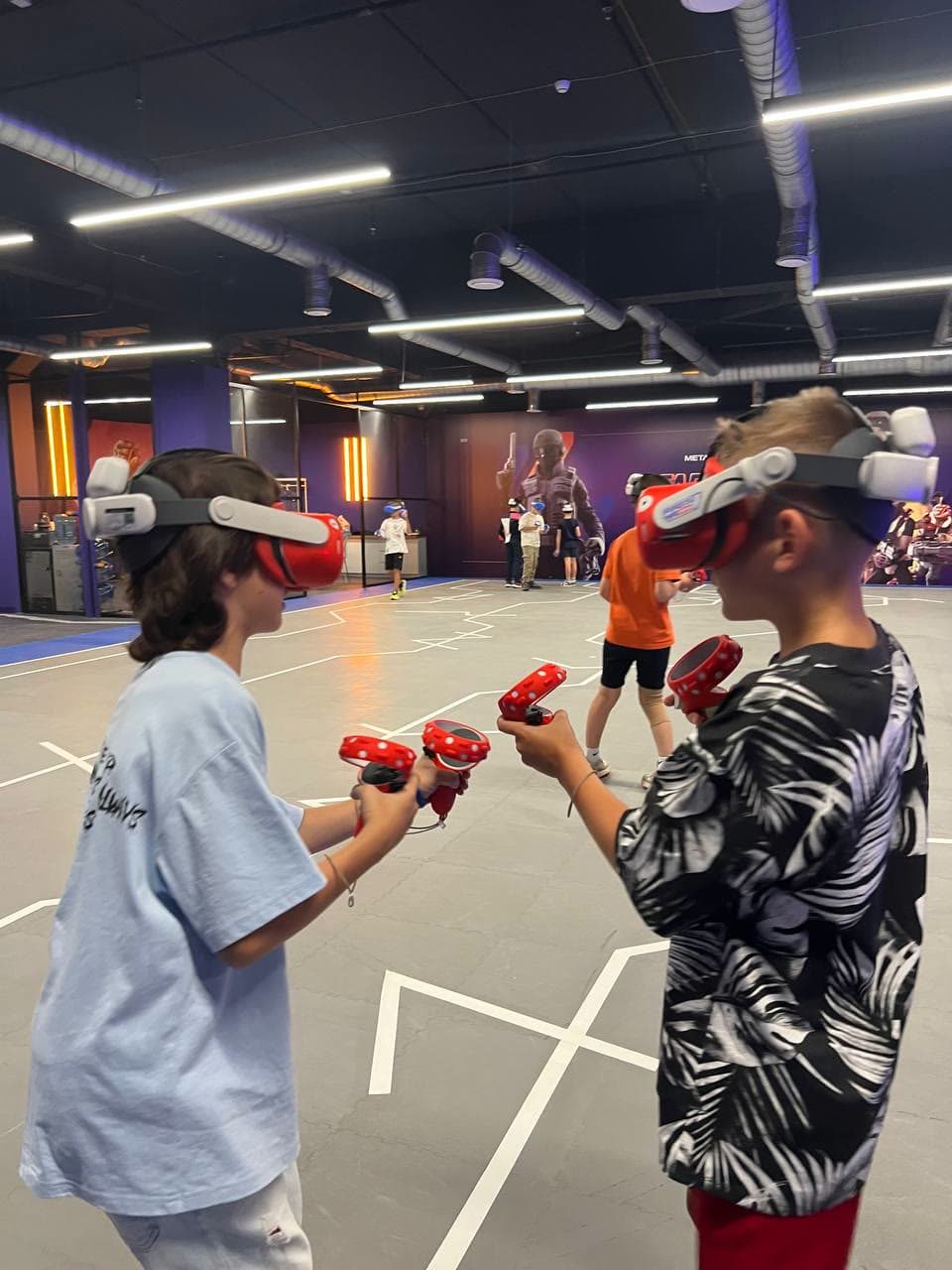
A VR arena sells experiences by the session. Groups book a game, a birthday party or a corporate event, and each game supports 4 to 20 players, so one party can fill the arena in a single booking. Content drives return visits: a match plays out differently each time, and Metaforce releases new maps or games every 6 months as included updates. We don't publish repeat-visit statistics, so model return visits conservatively in your own plan.
The practical difference: a ninja gym sells a program to a child, a VR arena sells an event to a group, from kids 6+ to adults and companies. For more on combined venues, see our guide to the family entertainment center.
How do investment and fees compare?
Ninja gym franchises in the sources we checked start at about $360,000 and reach almost $2 million for the largest format [1][2][3][5]. Smaller independent gyms are possible: one industry guide estimates $50,000 to $250,000 depending on size and complexity [7]. That is a guide estimate, not an FDD figure.
Metaforce does not publish a US investment figure. In Russia, where most of our network operates, owners typically invest from RUB 2.5 million in total, about $30,000 at the Bank of Russia rate on 14 October 2026. That figure reflects Russian rent and prices, so treat it as a reference for the model, not a US forecast.
The structural difference is what you pay the brand. With Metaforce there is no franchise fee, no royalty and no marketing fee: only the subscription, paid upfront for the term. Venue, renovation and equipment are paid by the partner. The full breakdown is on franchise cost, and the reasoning behind the model is on no-royalty franchise.
How do space and staff compare?
Ninja gyms vary widely in size: 3,500–7,000 sq ft for Conquer Ninja [2], 5,600 sq ft at one USA Ninja Challenge gym with a capacity of 24 people [6], and 12,100 sq ft at one Ninja Nation gym [4]. One guide reports owners leasing 11,000 to 30,000 sq ft [7]. They need high ceilings for climbing walls and swinging obstacles, plus mats across the floor.
A Metaforce venue needs 100–700 m² in total, with an optimal 150–250 m² (about 1,610–2,690 sq ft) and a 100–150 m² play area. The arena needs an open, level floor, ceilings from 2.5 m (about 8 ft) and 10–15 kW of power, but no fixed obstacles. A team of 2–3 people per day runs it: game masters brief players, fit headsets and run the session, with reception and a manager. Metaforce provides launch support, staff training and a knowledge base.
Can a ninja gym add a VR arena?
For an existing gym, a VR arena is a question of space and audience rather than a new business. Three points to check:
- A free zone. The arena needs an open area of 50–300 m² (about 540–3,230 sq ft) without equipment. A separate lounge is not required inside a host venue; guests can wait in your existing lobby.
- The age gap. Ninja programs are built around children, from age 2 up to 17 at one gym [6]. VR shooters are for ages 7+, so the arena can also serve parents who wait during classes, adult groups and companies on weekday evenings.
- Party packages. A birthday that combines an obstacle session with a VR game is a larger package from the same booking. Price it from your own costs.
Launch takes from a week to several months, depending mainly on the venue and renovation. The same logic applies to other large active venues; see our page on a VR arena for trampoline parks.
How to open a ninja gym or a VR arena: questions for your plan
- Audience. Which ages will pay most often, and who serves the age groups you miss?
- Revenue mix. What share will come from memberships, from parties and from groups?
- Fees. What will you pay the brand over 3 and 5 years at your expected revenue?
- Staff. How many coaches or game masters do you need on a Saturday, and on a Tuesday morning?
- Space and safety. What ceiling height, flooring and insurance does each format require?
For a wider view of formats, see our entertainment franchise comparison.
Apply now and send us your floor plan; we will tell you what fits.
FAQ
How much does a ninja gym franchise cost?
In the FDD summaries we checked, from $360,000–$627,500 (Conquer Ninja, 2026) to $1,183,500–$1,967,500 (Ninja Nation, 2024), with franchise fees of $40,000–$60,000.
What royalty do ninja warrior gym franchises charge?
In our four examples, 6–7.5% of gross sales plus a 1.5–3% brand fund.
How big is a ninja gym?
From about 3,500 sq ft to over 12,000 sq ft in the sources we checked. A Metaforce play area is 50–300 m² (about 540–3,230 sq ft).
Can a ninja gym add a Metaforce VR arena?
It can if it has a free, level area of at least 50 m² with ceilings from 2.5 m. No Metaforce arenas operate inside ninja gyms yet.
Does Metaforce charge a royalty?
No. Partners pay a flat subscription from $4,990 for 6 months, with no franchise fee, royalty or marketing fee.
Sources
Checked October 2026. Figures change with each FDD year; always confirm current terms with the franchisor.
- 1851 Franchise, "Franchise deep dive: USA Ninja Challenge" (2026 FDD, updated July 2026): https://1851franchise.com/usa-ninja-challenge/franchise-deep-dive-usa-ninja-challenge-franchise-costs-fees-profit-and-data-2726600
- Franzy, Conquer Ninja franchise listing (aggregator; 2026 FDD): https://franzy.com/franchises/conquer-ninja
- Franzy, Ninja Nation franchise listing (aggregator; 2024 FDD): https://franzy.com/franchises/ninja-nation
- Franchising.com, "Ninja Nation Opening Second Dallas Area Location in Murphy" (press release, August 2020): https://www.franchising.com/news/20200826_ninja_nation_opening_second_dallas_area_location_in_murphy.html
- Franzy, Ultimate Ninjas franchise listing (aggregator; 2024 FDD): https://franzy.com/franchises/ultimate-ninjas
- Community Impact, "USA Ninja Challenge in The Woodlands trains kids for Olympic-style obstacle racing" (local news, June 2025): https://communityimpact.com/the-woodlands/business/usa-ninja-challenge-in-the-woodlands-trains-kids-for-olympic-style-obstacle-racing/
- TRUiC, "How to Start a Ninja Warrior Gym" (industry guide, updated June 2026): https://truicbusinessideas.com/ninja-warrior
- TRUiC, "Business Insurance for Ninja Warrior Gyms" (industry guide, updated February 2026): https://howtostartanllc.com/business-insurance/business-insurance-for-ninja-warrior-gyms